Canonical
26 April 2016
Canonical and Wolfram Research® are excited to announce the first app collaboration with cloud connect functionality for Ubuntu developers and users.
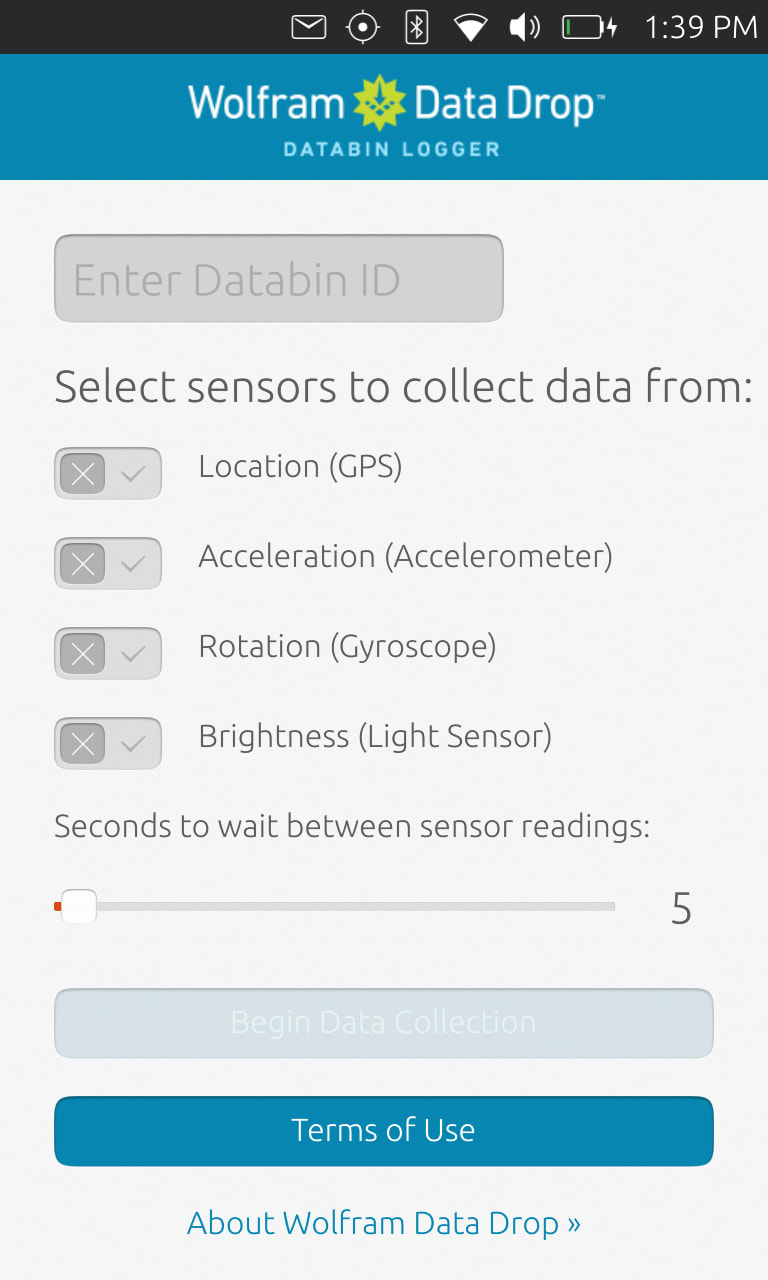
The Wolfram Data Drop™ Logging mobile application is available now on the Ubuntu Phone and is already available to download from the Ubuntu Store. This is the first in a series of initiatives between the technology company and open software provider. The application turns an Ubuntu phone into a powerful cloud-connected sensor collection device. It has the ability to send location, acceleration and rotation data directly to a Wolfram Cloud Databin where you can then interact and use your own data just like any other Wolfram data source.
Entries can be easily sent to a databin by using the Wolfram Data Drop RESTful API:
 // Define a JS function that will send the data to Data Drop, params
   // should be a list of pairs of strings
   function sendDataPoints(params) {

       // Get bin ID entered by user
       var binId = binInput.getText(0,binIdLength);

       // Setup elements for HTTP request
       var client = new XMLHttpRequest();
       var urlBase = "https://datadrop.wolframcloud.com/api/v1.0/Add?bin="+binId;

       // Build the URL using the base and the params
       var url = urlBase;
       for( var i = 0; i < params.length; i++ ) {
           url += ("&" + params[i][0] + "=" + params[i][1]);
       }

       // Perform the network request
       client.open("GET", url, true);
       client.send(null);

       // DEBUG FLAG
       console.log("URL sent: ", url)

   }  // End sendDataPoints function
These code snippets show how easy it is to use Wolfram Data Drop services in an Ubuntu App. This along with how easy it is to create Ubuntu Phone Apps using our SDK and Qt Quick is a testament to our developer promise to be as easy and approachable as possible. With these two tools, anyone can easily make an app and connect it to Wolfram’s powerful backend cloud data engine with the Wolfram Data Drop.
Canonical and Wolfram Research share a strong interest in building the next phase of computing and anticipate exciting innovations forged by this partnership.
To celebrate our user’s creativity, Canonical and Wolfram Research are hosting a joint competition that asks users to tweet the most original findings from their collected sensor data! To enter, tweet your findings with hashtag #UbuntuWolfram and the top five most original tweets will win an Ubuntu t-shirts and Wolfram Spikey Kit Entry, with the grand prize as an Aquaris M10 Ubuntu Edition! The competition begins on April 25 and finishes May 25 – Happy findings!